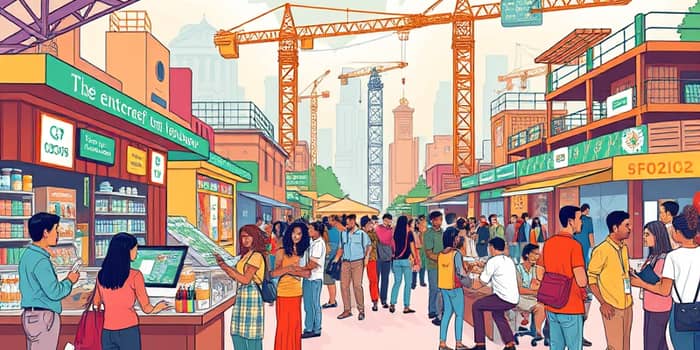
The journey to prosperity is rarely straightforward. While some nations and communities forge ahead, unlocking new levels of wealth and well-being, others remain trapped in cycles of aid dependency and stagnation. This article delves into the heart of the paradox that sustained prosperity often arises through unexpected channels, revealing the forces that separate success from struggle.
The term "Prosperity Paradox" was popularized by Clayton Christensen and co-authors, describing why traditional aid and infrastructure spending fail to deliver lasting wealth. The core observation: despite significant external investment, many regions remain impoverished, whereas some with fewer resources innovate and flourish. This phenomenon demonstrates that direct resource transfer cannot replace market-creating innovation as the catalyst for growth.
Prosperity is not a product of top-down disbursements alone; it emerges when entrepreneurs develop products and services that bring new populations into the economy. These innovations ignite systemic change, pulling in distribution networks, credit systems, and ancillary industries that sustain long-term wealth.
Traditional development strategies focus on building visible assets—schools, clinics, roads—assuming physical infrastructure will lay the groundwork for prosperity. Yet many such projects collapse without local demand and ownership. For instance, wells funded by NGOs in rural Nigeria frequently fell into disrepair because communities lacked maintenance systems and incentive to sustain them.
Visible investments are easy to measure and attract donors, but they seldom create the underlying economic activity necessary to maintain them. Without market forces, these projects often become stranded assets, prompting the question: What truly drives prosperity?
Market-creating innovations make products or services affordable and accessible to previously excluded populations. By expanding the consumer base, these breakthroughs initiate a ripple effect:
Historical examples illuminate this process:
Quantitative evidence underscores the link between market-creating innovation and economic growth. In the United States, periods of rapid GDP increase align with waves of transformative products. In Africa, mobile telephony generated employment and infrastructure in regions long considered unreachable.
Economist Julian Simon famously argued that the ultimate resource is the human mind, emphasizing innovation over raw materials. This view challenges the notion that resource-poor countries are doomed. Instead, societies thrive by harnessing creativity and problem-solving to build markets where none existed.
Top-down aid often overlooks local market dynamics, leading to well-intentioned but unsustainable projects. Conversely, innovation-led growth leverages demand to ensure long-term viability. Governments play a supportive role—through regulation, education, and infrastructure—but cannot substitute for entrepreneurial discovery.
Across continents, success stories share a common thread: market creation preceded infrastructure. In South Korea, Samsung’s consumer electronics tapped local markets before global expansion. In Rwanda, homegrown agritech startups increased yields and established supply chains. India’s digital payment platforms democratized finance, pulling rural populations into formal banking. Meanwhile, regions relying primarily on aid often saw short-lived gains.
Thriving societies cultivate ecosystems that encourage entrepreneurs to address unmet needs. They invest in education that fosters critical thinking, create legal frameworks for business formation, and maintain inclusive financial systems. Struggling regions depend heavily on external funding, lacking both the cultural and institutional support for localized market development.
To break the cycle of stagnation, policymakers should:
By enabling inclusive economic participation, these measures can unlock latent potential and drive sustainable growth.
Advanced economies face their own paradox: aging populations and declining labor force participation threaten long-term growth. Without fresh waves of innovation, even wealthy nations risk stagnation. Globally, rising inequality endangers social cohesion, underscoring the need for inclusive prosperity rather than aggregate gains alone.
Looking forward, the next frontiers for market-creating innovation include renewable energy solutions for remote areas, affordable healthcare diagnostics, and digital platforms that democratize education. Success in these domains could rewrite the rules of development and extend prosperity to millions more.
Ultimately, the Prosperity Paradox teaches us that wealth is self-sustaining when it grows from the ground up. By championing local innovators, fostering supportive institutions, and prioritizing market creation over mere infrastructure, societies can transform struggle into shared success.
References