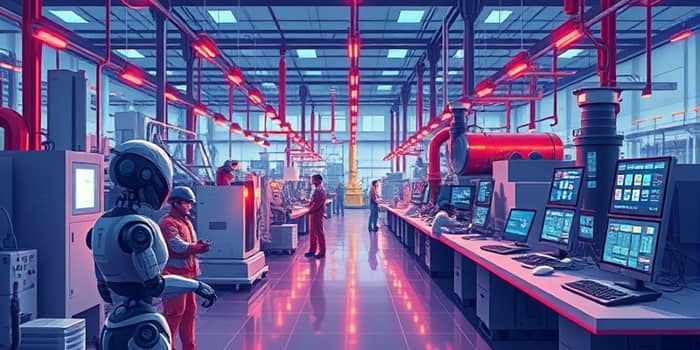
In 2025, U.S. manufacturing is undergoing a significant transformation. After decades of globalization-driven expansion, the sector faces the reality of a reset, not a rebound. This era is defined by strategic shifts, bold policy moves, and a concerted push toward advanced technology adoption.
Manufacturing output rose just 0.8% year-to-date in 2025, painting a picture of modest growth against historical standards. Forecasts suggest near-flat performance into 2026, confirming that the industry is recalibrating rather than roaring back. The Purchasing Managers Index (PMI) fell to 48 in July, marking five consecutive months of contraction.
Regionally, Florida, Texas, and Georgia have emerged as bright spots. Florida alone contributed 17% of the nation’s manufacturing expansion, driven by investments in chemicals and industrial equipment. Texas follows with strength in electronics and life sciences, while Georgia anchors its recovery in aerospace and logistics. This uneven landscape underscores a broader narrative: growth remains lackluster growth and no clear catalyst, yet pockets of resilience persist.
Federal policy has been instrumental in steering this new industrial era. Legislators passed the 2025 One Big Beautiful Bill Act, introducing qualified production property tax incentives that lower the after-tax cost of capital. The CHIPS Act further amplifies semiconductor investments, while ongoing tax credits for automation and equipment modernization continue to lure capital.
These measures have prompted more than $500 billion in chip sector commitments by July 2025 and attracted roughly 200 foreign investment projects in industrial equipment since 2022. As a result, firms can pursue both capacity expansion and digital upgrades concurrently, laying the groundwork for a major legislation fueling growth.
Automation and artificial intelligence (AI) are no longer reserved for industry giants. Rapid advances in robotics, IoT sensors, and cloud-based platforms make advanced manufacturing more accessible to SMEs. Small and medium enterprises are leveraging AI-driven quality control, predictive maintenance, and digital twins to optimize processes and reduce downtime.
Cybersecurity has become a parallel priority as digital integration deepens. Firms invest in robust firewalls, encrypted data channels, and real-time threat detection. This focus is critical to protect sensitive designs, maintain operational continuity, and ensure trust across newly formed domestic supply chains.
Several regions have developed niche strengths reflecting national strategic goals. Phoenix leads in chip fabrication, fueled by Arizona’s pro-business climate. Salt Lake City has become a hub for clean energy technologies, leveraging local solar and wind initiatives. Memphis dominates logistics and distribution, sitting at a crossroads of river, rail, and road networks. South Carolina has also surged in automotive and aerospace manufacturing, drawing billions in foreign direct investment.
These hubs exemplify how targeted policy and local expertise combine to generate resilient, domestic-centric supply chain networks, ensuring that critical components stay within U.S. borders.
Despite these gains, significant obstacles persist. The labor market is tight, with more than 400,000 manufacturing job vacancies. High demand for skilled technicians clashes with an aging workforce. In July 2025 alone, manufacturers cut 11,000 positions due to production slowdowns and shifting priorities, revealing the tension between capacity and demand.
Soft consumer demand further complicates the outlook. Persistent inflation and weak real wage growth have driven a pivot from discretionary spending toward essentials. Meanwhile, tariffs on key inputs and global geopolitical risks push input costs higher, prompting companies to focus on efficiency gains rather than broad-scale expansion.
Amid challenges, firms are discovering innovative solutions. Leaders advise companies to double down on automation and infrastructure, prioritizing projects with clear productivity payoffs and measurable ROI. Workforce development emerges as equally vital, bridging skills gaps through targeted training.
By focusing on targeted productivity gains and strategic collaborations, businesses can thrive even in a fragmented growth environment, positioning themselves for long-term competitiveness.
The future of U.S. manufacturing will not mirror past decades of uniform expansion. Instead, growth will be selective, driven by sectors with strategic advantages and strong policy support. Semiconductor, clean energy, and aerospace stand out as pillars of this transformation, propelled by public incentives and private capital.
Companies that embrace advanced technologies, invest in workforce revitalization, and cultivate robust supply chains will lead the next wave. Scenario planning, targeted productivity investments, and ongoing policy engagement will be essential. While challenges remain—from economic headwinds to geopolitical uncertainties—this new industrial era offers a clear roadmap for sustainable, resilient growth.
As policy evolves and technology advances, the combined forces of public incentives, private innovation, and skilled talent will define manufacturing’s trajectory. In this dynamic landscape, adaptability is the ultimate advantage, ensuring America’s factories remain at the forefront of global competition.
References